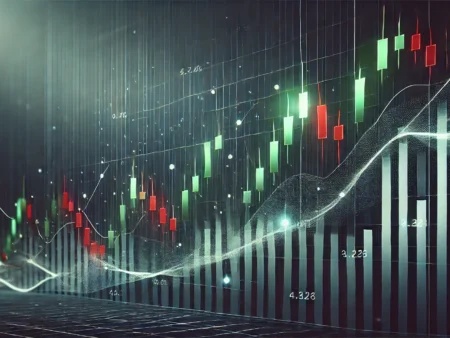
News trading is the practice of entering and exiting trades based on the release of significant economic, political, or geopolitical news. When major news hits the market, it often causes prices to move rapidly in one direction. These sudden price shifts create high volatility. For many traders, this volatility represents an opportunity to make quick profits.
This guide will explain how news trading works. We will cover the most important news events, specific strategies, and how to protect your money.
Why News Moves the Markets
Markets react to information. Every price movement you see on a chart is a reaction to information. Most of the time, the market “digests” this information slowly. However, high-impact news causes the market to react all at once.
There are two main reasons why news drives price action:
- Volatility: Volatility refers to how fast and how far a price moves. News causes price spikes.
- Liquidity: Liquidity is the ability to enter and exit a trade without moving the price. During big news, liquidity can drop. This means prices can “gap” or jump over your stop-loss orders.
The Most Important News Events
Not all news is created equal. Most news events have little effect on the markets. To be a successful news trader, you must focus only on high-impact news.
Economic Indicators
Economic indicators are data points released by governments. They show the health of a country’s economy.
- Non-Farm Payrolls (NFP): This is one of the most important reports for the US Dollar. It shows how many new jobs were added in the last month. If the number is much higher than expected, the USD usually rises.
- Consumer Price Index (CPI): This measures inflation. If inflation is rising faster than expected, central banks may raise interest rates. This often makes a currency stronger.
- Gross Domestic Product (GDP): This measures the total value of goods and services produced by a country. A strong GDP suggests a healthy economy and a strong currency.
Central Bank Decisions
Central banks, like the Federal Reserve in the US, have the power to control money. Their decisions are the “king” of news trading.
- Interest Rate Decisions: This is the big one. When a central bank raises interest rates, its currency usually gains value. Investors want to hold currencies that pay higher interest.
- Monetary Policy Statements: These are the speeches given by central bank leaders. Even if rates don’t change, the “tone” of the speech matters. If a leader sounds “hawkish” (favoring higher rates), the currency rises. If they sound “dovish” (favoring lower rates), the currency falls.
Geopolitical News
Geopolitical news involves politics, wars, or international trade deals. These events are harder to predict than economic data.
- Elections: A surprising election result can cause a country’s currency to crash or soar instantly.
- Conflict and War: War creates massive uncertainty. This often leads to “risk-off” sentiment. In these times, traders sell risky assets (like stocks) and buy “safe-haven” assets (like Gold or the US Dollar).
How to Use an Economic Calendar
You do not need to guess when news will arrive. Professional traders use an economic calendar. This is a tool that lists all upcoming news events.
Most calendars rank news by importance:
- High Impact (Red): These cause massive price moves. These are your primary targets.
- Medium Impact (Orange): These cause moderate moves.
- Low Impact (Yellow): These rarely move the market.
Pro Tip: Always check your calendar at the start of each week. Look for “High Impact” events involving the currencies you trade.
Top News Trading Strategies
There are several ways to trade news. Each method has its own risks and rewards.
1. The Straddle Strategy
The straddle strategy is popular for beginners because it does not require you to predict the direction of the news. Instead, you bet that a big move is coming.
How to do it:
- Wait for a high-impact news event (like NFP).
- About 1 to 5 minutes before the news, place two “pending orders” near the current price.
- Place a Buy Stop order slightly above the current price.
- Place a Sell Stop order slightly below the current price.
- When the news hits, the price will spike. It will trigger one of your orders and move away from the other.
The Risk: You can experience “whipsaws.” This is when the price spikes up to hit your buy order, then immediately crashes down to hit your sell order, leaving you with two losing trades.
2. The Reaction (Trend) Strategy
This strategy involves waiting to see how the market reacts before entering a trade. This is often safer than the straddle method.
How to do it:
- Wait for the news to be released.
- Watch the first 5 to 15 minutes of price action.
- Look for a strong candle that closes in a clear direction.
- Wait for a small “pullback” (a temporary move against the trend).
- Enter the trade when the price begins to continue the original direction.
The Benefit: You are trading with the market’s momentum. You are not guessing; you are reacting.
3. The Reversal Strategy
Some traders look for “fakes.” Sometimes, a news event causes a huge spike that is immediately rejected.
How to do it:
- Wait for the news to hit and cause a massive spike.
- Look for signs of exhaustion. This could be a long “wick” on a candlestick or a failure to make a new high.
- If the price fails to continue, enter a trade in the opposite direction.
The Risk: This is a very advanced strategy. It is easy to get “run over” if the news trend is actually real.
The Hidden Dangers: Slippage and Spreads
News trading is not just about picking directions. You must understand two technical risks that can destroy your account.
Slippage
Slippage is when your order is filled at a much worse price than you expected. During news, the market moves so fast that there are no buyers or sellers at your requested price.
Example: You set a stop-loss at 1.1000 to protect your account. A news spike happens, and the price jumps from 1.1005 directly to 1.0950. Your stop-loss is executed at 1.0950. You lost much more than you planned. This is called “negative slippage.”
Spread Widening
The “spread” is the difference between the buy price and the sell price. In normal markets, the spread is very small. During high-impact news, banks and brokers widen the spread to protect themselves.
If you try to trade during the exact second the news is released, you might find that the spread is 10 or 20 times larger than usual. This can immediately put your trade in a large loss.
Essential Risk Management Rules
Because news trading is highly volatile, you must be disciplined. Without strict rules, one bad news event can wipe out your entire account.
- Use a Stop-Loss: Never trade news without a hard stop-loss. However, remember that slippage can still occur.
- Reduce Position Size: Since volatility is higher, you should trade with smaller amounts of money. If you normally trade 1.0 lot, you might only trade 0.1 lot during news.
- Avoid “Chasing” the Candle: Do not jump into a trade after the price has already moved 50 pips. You are likely entering at the very end of the move.
- Know Your Exit: Before you enter, know exactly when you will take your profit. Do not get greedy. News spikes often reverse quickly.
Common Beginner Mistakes
Avoid these mistakes to increase your chances of success:
- Trading the “Rumor”: Don’t trade because you think something bad will happen. Only trade when the actual data is released.
- Over-leveraging: Using too much leverage during news is the fastest way to blow an account. The price swings will hit your margin before you can react.
- Trading Too Close to the News: The first few seconds of news are often chaotic and unpredictable. Sometimes, waiting 15 minutes is the smartest move.
- Ignoring the Economic Calendar: Trading high-impact news without knowing what it is can be disastrous.
Your News Trading Checklist
Before you place your next news trade, run through this list:
- I have checked the economic calendar.
- I know the exact time the news is released.
- I know the impact level (High/Medium/Low).
- I have calculated my position size based on higher volatility.
- I have set a clear stop-loss and take-profit level.
- I understand the potential for slippage and spread widening.
- I have a plan if the trade goes against me immediately.
News trading can be a powerful way to grow your account. However, it requires patience, discipline, and a deep understanding of market mechanics. Start with a demo account to practice your timing and your reactions before using real money.