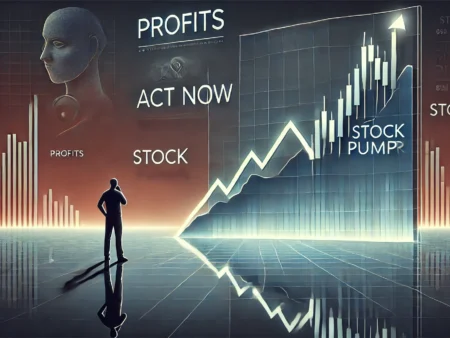
Impulsive trading is the act of entering or exiting a trade without following a pre-set plan. It happens when emotions like fear or greed take control of your decision-making process. If you find yourself “chasing” a price move or trying to “win back” money after a loss, you are trading impulsively. This behavior is the primary reason most retail traders lose their money.
To succeed, you must learn how to stop impulsive trading by understanding the biological and psychological roots of these actions. By mastering your emotions, you move from a gambling mindset to a professional trading mindset.
What Is Impulsive Trading?
Impulsive trading occurs when the emotional brain overrides the logical brain. In professional terms, it is a failure of discipline. Instead of waiting for your specific setup to appear, you react to market movements.
You might see a massive green candle and jump into a long position because you fear missing out. Or, you might see a losing trade and immediately open a larger position to “fix” the mistake. Both are impulsive.
In both scenarios, you are no longer following a strategy. You are simply reacting to stimuli. This reaction destroys your edge and leads to rapid account depletion.
Why Do Traders Trade Impulsively?
Understanding the “why” is the first step toward fixing the problem. Impulsive trading is not a character flaw. It is a biological response.
The Dopamine Loop
Trading provides immediate feedback. When you win a trade, your brain releases dopamine. This is the “feel-good” chemical. It creates a high.
This high makes you want to repeat the behavior. However, the dopamine loop also works when you lose. You feel a “pain” from the loss, and your brain seeks a quick dopamine hit to offset it. This leads to “revenge trading,” where you try to force a win to stop the emotional pain.
The Amygdala Hijack
Your brain has an ancient survival mechanism called the amygdala. Its job is to protect you from physical danger. When you see a large loss on your screen, your brain perceives it as a threat to your survival.
This triggers a “fight or flight” response. In trading, “fighting” looks like opening more positions to fight the market. This “amygdala hijack” shuts down your prefrontal cortex. The prefrontal cortex is the part of your brain responsible for logic and long-term planning. Once this shuts down, you can no longer think clearly.
Fear of Missing Out (FOMO)
FOMO is a social and psychological trigger. When you see other traders making profits or see a price moving rapidly, you feel left behind. This creates intense psychological pressure. You feel that if you do not enter the trade now, you have lost a wealth-building opportunity. This urgency is a trap.
Cognitive Biases
Several mental shortcuts lead to impulsive mistakes:
- Recency Bias: You believe that because the last three trades were winners, the next one must also be a winner.
- Confirmation Bias: You only look for news that supports the trade you already want to take, ignoring all warning signs.
- Loss Aversion: The pain of a loss is twice as powerful as the joy of a gain. This makes you hold losing trades too long, hoping they will turn around.
The Real Cost of Impulsive Trading
The damage from impulsive trading is not just financial. It affects every part of your life as a trader.
Financial Depletion
This is the most obvious cost. Impulsive trades often lack proper stop losses. You might enter a trade with too much size or without an exit plan. A single impulsive “revenge trade” can wipe out months of disciplined gains.
Emotional Burnout
Trading is mentally taxing. When you trade impulsively, you experience high stress and high volatility in your emotions. You go from extreme euphoria to deep depression in a matter of minutes. This rollercoaster is exhausting. Eventually, you will experience burnout, which leads to a total loss of interest in trading.
The Loss of Confidence
Every time you break your rules, you lose a piece of your self-discipline. You begin to doubt your strategy. You start to wonder if you are “unlucky” rather than recognizing that you are simply undisciplined. This erosion of confidence makes it impossible to trade effectively when the market finally gives you a valid signal.
How to Identify Your Impulsive Triggers
To stop the cycle, you must recognize the warning signs before the trade is placed.
Physical Red Flags
Your body often knows you are about to trade impulsively before your mind does. Watch for:
- An increased heart rate.
- Shallow breathing.
- Tension in your shoulders or jaw.
- A feeling of restlessness or “itchiness.”
Behavioral Red Flags
If you notice these patterns, you are likely in an impulsive state:
- Chasing Candles: Entering a trade after the price has already moved significantly from your entry point.
- Increasing Size Under Stress: Adding to a losing position to lower your break-even point.
- Trading Without a Setup: Opening a position simply because “the market looks like it’s going to move.”
- Ignoring Stop Losses: Moving your stop loss further away to avoid being “stopped out.”
Strategies to Stop Impulsive Trading Once and For All
Stopping impulsive trading requires a combination of external rules and internal training. You cannot rely on willpower alone.
Build a Rigid Trading Plan
A trading plan is your “law.” It must include:
- The Setup: What exactly must happen for you to enter a trade? (e.g., a specific candlestick pattern at a support level).
- The Exit (Profit): Where will you take your profit?
- The Exit (Loss): Where is your stop loss? This must be decided before you click buy or sell.
- Position Sizing: How much of your capital are you risking on this single trade?
If a trade does not meet every single requirement of your plan, you do not take it. There are no exceptions.
Implement the “Rule of Three”
When you feel a strong urge to trade, implement a mandatory waiting period.
For example, if you feel an intense urge to enter a trade, force yourself to step away from your computer for three minutes. Use those three minutes to breathe deeply. Often, the “emergency” feeling will pass. If the urge persists after three minutes, ask yourself: “Am I following my plan, or am I following my feelings?”
Use Automation and Limit Orders
Human beings are prone to error. Technology is not.
Instead of using “Market Orders” (which execute at whatever the current price is), use Limit Orders. Limit orders require the price to come to you. This prevents “chasing” the market.
Additionally, use Automated Stop Losses. Once you enter a trade, place your stop loss immediately. This removes the temptation to move the stop loss later when the trade goes against you.
Establish Daily Loss Limits
You must treat trading like a business. A business has a budget.
Set a “Daily Loss Limit.” This is the maximum amount of money you are allowed to lose in a single day. Once you hit that number, you must shut down your trading platform.
Some traders use a “Max Drawdown” rule for the week. If you lose 5% of your total account in a week, you are done for the week. This protects you from the “revenge trading” spiral that happens after a bad day.
The Power of the Trading Journal
You cannot fix what you do not measure.
Every single trade must be recorded in a journal. Do not just record the profit and loss. You must record your emotional state.
Ask yourself these questions for every trade:
- Did I follow my trading plan?
- What was my emotional state before and during the trade?
- Did I feel the urge to revenge trade?
- Was I chasing the price?
Over time, you will see patterns. You might realize that you lose 80% of your money on Tuesdays when you are tired, or that you always trade impulsively after a large win. This data is more valuable than any indicator.
Building Mental Toughness and Discipline
Discipline is a muscle. You must train it every day.
Separation of Self-Worth and P&L
Many traders struggle because they tie their self-worth to their Profit and Loss (P&L) statement. If they lose money, they feel like a failure as a human being.
This is a mistake. A trade is simply a statistical sample. A loss is just the “cost of doing business.” When you stop viewing a loss as a personal insult, you will find it much easier to follow your stop losses.
Mindfulness and Meditation
Professional athletes use meditation to stay focused and calm. Traders should do the same.
Practice mindfulness for 10–15 minutes every day. Learn to observe your thoughts without reacting to them. When you can observe a thought like “I need to get that money back” without actually acting on it, you have achieved mastery.
The “Process Over Outcome” Mindset
Shift your focus from how much money you made to how well you followed your rules.
You can have a winning trade that was executed poorly (e.g., you chased the price and ignored your stop). That is a bad trade, even if it made money. Conversely, you can have a losing trade that was executed perfectly (e.g., you followed your plan and hit your stop loss). That is a good trade.
If you focus on the process, the profits will eventually follow. If you focus only on the money, the impulses will eventually destroy you.
Summary Checklist for Emotional Control
Use this checklist whenever you feel the urge to enter a trade:
- [ ] Check your heart rate: Are you calm or agitated?
- [ ] Check your plan: Does this setup meet 100% of my criteria?
- [ ] Check your exit: Do I have a predefined stop loss and profit target?
- [ ] Check your size: Am I risking too much of my account on this one trade?
- [ ] The 3-Minute Test: Have I waited three minutes before clicking “order”?
By following these steps, you transition from a reactive gambler to a proactive professional. Trading is not about predicting the future; it is about managing your reaction to uncertainty. Mastery of your impulses is the only path to long-term success.