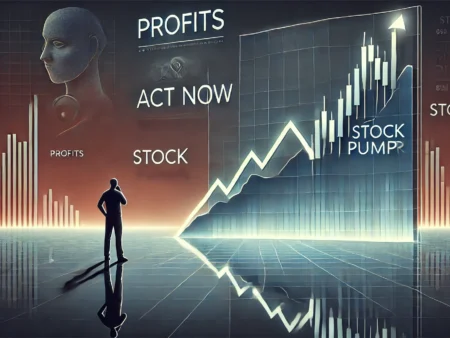
Fear of Missing Out, commonly known as FOMO, is the primary reason most retail traders lose money. It is the intense anxiety that you are missing a profitable opportunity while the market moves without you. This emotion drives you to make impulsive decisions based on fear rather than logic.
When you experience FOMO, you stop following your strategy. You stop looking at charts objectively. Instead, you start chasing price action. This behavior leads to buying at the top and selling at the bottom. To become a successful trader, you must understand why this happens and how to stop it.
Understanding FOMO: The Psychology of the “Last Chance”
Trading is as much a psychological game as it is a mathematical one. Your brain is wired for survival, not for profit. In the wild, missing a meal could mean death. In the modern market, missing a “pump” or a “breakout” only means missing a trade.
However, your brain often fails to make this distinction. When you see a stock or a crypto asset skyrocketing, your brain triggers a stress response. You feel an urgent need to act immediately. This is a biological reaction designed to protect you, but it is destructive in a financial context.
The Biological Basis of FOMO
The human brain contains a part called the amygdala. This area handles your emotions, especially fear and excitement. When you see a massive green candle on a chart, your brain releases dopamine. This is the “reward” chemical.
Dopamine creates a sense of anticipation. It makes you feel that a big win is just one click away. At the same time, the fear of missing that win creates anxiety. This combination of dopamine and fear creates a powerful urge to enter the market right now. This “emotional hijack” prevents your prefrontal cortex—the part of your brain responsible for logic—from functioning correctly.
The Role of Social Media in Modern Trading
In the past, you only had to compete with the person at the next desk. Today, you compete with the entire world. Social media has amplified FOMO more than ever before.
Platforms like X (formerly Twitter), Reddit, and Discord are filled with “profit screenshots.” You see people posting massive gains from single trades. These posts are highly curated. People rarely post their losses. They only show their wins.
When you scroll through your feed, you see a constant stream of “easy money.” This creates a false reality. You begin to feel that everyone is getting rich while you are stuck on the sidelines. This perceived gap between your bank account and theirs is the fuel for FOMO.
How FOMO Triggers Bad Trading Decisions
FOMO does not just make you feel bad; it actively ruins your technical setups. It forces you to ignore the very rules you created to keep your capital safe.
Chasing the “Green Candle”
The most common symptom of FOMO is chasing the price. You see a coin or a stock moving up quickly. You didn’t plan to trade it, but the momentum looks too good to ignore. You buy after the move has already happened.
The problem is that markets move in waves. Large price moves are often followed by “corrections” or “pullbacks.” When you buy at the peak of a vertical move, you are buying when the market is “overextended.” You are essentially entering the trade at the worst possible moment. You are buying from the people who bought early and are now ready to take their profits.
Neglecting Risk Management
A professional trader always knows their exit point before they enter a trade. They know exactly where their stop-loss will go. FOMO kills this discipline.
When you are driven by the fear of missing out, you focus entirely on the potential upside. You think, “If I don’t buy this now, it might go up another 50%.” In this state of mind, the downside becomes an afterthought. You might skip your stop-loss or use a much larger position size than you normally would. You are no longer trading a setup; you are gambling on a feeling.
The Danger of Over-Leveraging
Leverage allows you to control large positions with a small amount of capital. It is a powerful tool, but it is also a dangerous one. FOMO often leads to over-leveraging.
When you feel you must catch a move right now, you use high leverage to maximize your potential profit. However, high leverage also brings extreme volatility. A small price correction can wipe out your entire position. If you enter a trade late due to FOMO, you have less “room to breathe.” A minor move against you will trigger your liquidation, even if the trend eventually goes your way.
The Financial Toll: How FOMO Erodes Your Capital
Trading is a game of capital preservation. If you lose your capital, you can no longer play the game. FOMO is a direct attack on your capital.
Entry at the Top
When you chase a trade, you are entering at a high price-to-value ratio. You are paying a premium for the privilege of being in the trade. This significantly lowers your Risk-to-Reward (R:R) ratio.
A good trade offers a high reward for a small risk. An FOMO trade offers a small reward (because the move is already mostly finished) for a huge risk (because you are buying at the top). Mathematically, you cannot stay profitable if you consistently take trades with poor R:R ratios. Even with a high win rate, one large FOMO loss can erase ten small wins.
The Cycle of Revenge Trading
FOMO often leads to another dangerous behavior: revenge trading. This happens after you experience an FOMO-induced loss.
Imagine you chase a pump, the price hits your stop-loss, and you lose money. Instead of walking away, you feel angry. You feel the market “owes” you that money back. You immediately jump back in with a larger position to “get it back.” This is a desperate attempt to fix a mistake by making a bigger mistake. This cycle is how many traders go from a minor setback to a completely blown account.
Practical Strategies to Overcome FOMO
You cannot simply “stop feeling” emotions. Humans are emotional creatures. Instead, you must build a system that protects you from your own impulses.
Develop a Rigid Trading Plan
A trading plan is your manual for survival. It must include:
- Entry Criteria: Exactly what patterns or indicators must appear before you enter.
- Exit Criteria: Where you will take profit and where you will cut your losses.
- Position Sizing: How much of your account you will risk per trade.
- Timeframe Rules: When you will trade and when you will stay away.
If a trade does not fit your plan, you do not take it. It doesn’t matter if the candle is green or red. If it wasn’t in your plan, it is not a trade; it is a distraction.
Focus on Process, Not Profits
Amateur traders focus on how much money they made today. Professional traders focus on how well they followed their plan.
If you followed your plan but lost money, that was a good trade. It was a statistical outcome of a disciplined process. If you broke your rules but made money, that was a bad trade. You have reinforced a dangerous habit that will eventually kill your account. Shift your mindset. Aim to be a disciplined executor of your strategy rather than a person chasing “big wins.”
Master the Art of Waiting
The most important skill in trading is not knowing when to enter. The most important skill is knowing when to wait.
The market provides endless opportunities. There will always be another setup, another breakout, and another pump. The “perfect” trade is one that meets all your criteria and offers a high R:R ratio. If you miss a move, let it go. The market is not going anywhere. Your goal is to wait for the market to come to you, rather than you running after the market.
Use Automated Tools to Limit Emotion
Technology can be your best friend in managing your psychology. You can use several tools to remove the “human element” from your trading:
- Limit Orders: Instead of using market orders (which buy at the current price), use limit orders. This allows you to set the specific price you are willing to pay. If the price zooms past your limit, you simply missed the trade. You don’t chase it.
- Alerts: Set price alerts on your charting software. Instead of staring at the screen all day, let the software tell you when a key level is hit. This reduces the “visual stimulation” that triggers FOMO.
- Automated Stop-Losses: Always set your stop-loss at the moment you enter a trade. This ensures that your risk is fixed and prevents you from “hoping” a losing trade turns around.
Building a Disciplined Trading Mindset
Discipline is a muscle. You build it by making small, correct decisions every single day. It does not happen overnight.
Keep a Trading Journal
You cannot fix what you do not measure. A trading journal is a record of every trade you take, including your emotions at the time of entry.
When you review your journal, look for patterns. Do you notice that most of your losses happen around 10:00 AM? Do you notice that you tend to trade larger sizes when you see a specific influencer on Twitter? These patterns are your “blind spots.” Once you identify them, you can create specific rules to avoid them.
Practice Detachment from Money
This is the hardest part of trading. You must view your trading capital as “units” or “points” rather than “money.”
When you treat $1,000 as “the rent money,” your emotions will be through the roof. You will fear losing it, and you will crave winning it. This is a recipe for disaster. Trade with an amount of capital that you can afford to lose entirely. When the stakes feel lower, your ability to think clearly increases.
Accept the Reality of Losses
Every trader, even the best in the world, loses trades. Loss is a cost of doing business. It is like a restaurant owner paying for ingredients; the ingredients are gone, but that is how they make a profit.
Once you accept that losses are inevitable, you stop being shocked by them. When you stop being shocked by losses, you stop panicking. When you stop panicking, you stop FOMO-trading.
Summary of Key Takeaways
- FOMO is a biological response that impairs your ability to think logically.
- Chasing “green candles” leads to entering trades at the worst possible price.
- Over-leveraging and revenge trading are the fastest ways to lose your entire account.
- A rigid trading plan is your only defense against emotional trading.
- Focus on the process, not the profit. A good process eventually leads to consistent profits.
- Use limit orders and alerts to remove the urgency of “catching” every move.
- Journal your trades to identify and fix the emotional patterns that cost you money.