Have you ever watched a stock or a cryptocurrency skyrocket in value? You see everyone on social media posting massive gains. Suddenly, you feel a surge of panic. You fear you are missing the biggest opportunity of your life. This feeling is called FOMO, or the Fear of Missing Out.
Many traders fall into this trap. They jump into a trade simply because everyone else is doing it. This behavior is known as herd mentality in trading. While it feels safe to follow the crowd, it is often the fastest way to lose your capital. In the world of finance, the crowd is usually wrong when it matters most.
To succeed, you must understand why your brain wants to follow the herd. You also need to learn how to resist these instincts. This guide will explain the psychology of market mania and how you can protect your money.
The Evolutionary Roots of Herd Mentality
Human beings are social animals. For thousands of years, survival depended on staying with the group. If your tribe moved toward a water source, you moved with them. If the group ran away from a predator, you ran too.
In nature, following the group was a survival mechanism. It reduced risk and helped you find resources. However, the stock market is not the savannah. The rules of survival in the wild do not apply to modern markets.
In the market, following the group often means buying at the highest price. It also means selling at the lowest price. Your primal brain is trying to protect you, but it is actually leading you into a trap. Understanding this disconnect is the first step to becoming a disciplined trader.
Why the Crowd is Often Wrong
Markets are driven by two main forces: supply and demand. Herd mentality creates artificial supply and demand. When thousands of retail traders rush to buy a single asset, they drive the price up far beyond its true value.
This creates a “bubble.” A bubble occurs when the price of an asset exceeds its fundamental worth. Eventually, the bubble must burst. When the bubble bursts, the “herd” all tries to exit through the same small door at the same time. This mass exit causes a price crash, leaving latecomers with heavy losses.
The Feedback Loop of Emotion
Market movements often follow an emotional cycle. It starts with accumulation, where smart money quietly buys assets. This is followed by a markup phase, where the price rises steadily.
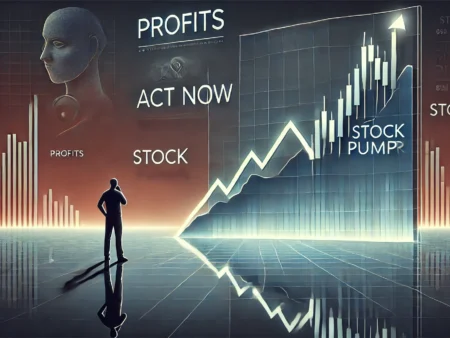
Then comes the mania phase. This is where herd mentality takes over. News outlets report on the gains. Social media influencers post screenshots of their profits. This creates a feedback loop. The rising price attracts more people, which drives the price even higher.
The danger is that the price is no longer moving because of value. It is moving because of emotion. Once the buying momentum slows down, the crowd panics, and the cycle reverses instantly.
The Three Pillars of Herd Mentality
To master your trading psychology, you must recognize the three psychological pillars that drive the crowd.
1. Social Proof
Social proof is a psychological phenomenon where people assume the actions of others reflect correct behavior. If you see ten people standing in line for a restaurant, you assume the food is great. In trading, if you see ten traders on a forum talking about a “moon shot,” you assume the trade is safe.
Social proof is dangerous because it ignores the motive of the crowd. The people talking about a stock may already have large positions. They want you to buy so they can sell their shares to you.
2. FOMO (Fear of Missing Out)
FOMO is a powerful emotional driver. It is not just about greed; it is about the fear of being left behind. When you see others making money while you are standing on the sidelines, it creates mental discomfort.
This discomfort drives impulsive decisions. Impulsive traders often skip their trading plan. They enter trades without stop-losses or proper position sizing. They enter because they are afraid of “missing out,” not because the chart shows a setup.
3. Recency Bias
Recency bias is the tendency to believe that what happened in the recent past will continue to happen in the future. If a market has gone up for five days straight, your brain tells you it will go up for five more days.
This bias makes traders “chase” green candles. They see a vertical move and assume the trend will never end. This ignores the fact that markets move in waves, not straight lines.
Cognitive Biases That Sabotage Your Profits
Even experienced traders struggle with cognitive biases. These are mental shortcuts that our brains use to process information quickly. While useful in daily life, they are deadly in trading.
Confirmation Bias
Confirmation bias happens when you only look for information that supports your existing trade. If you are long on a stock, you will actively seek out “bullish” news. You will ignore “bearish” signals or warnings about a market crash.
When you only listen to voices that agree with you, you are no longer trading. You are merely seeking validation for your mistakes.
The Availability Heuristic
This bias occurs when you judge the probability of an event based on how easily it comes to mind. If you recently saw a news story about a massive crypto gain, you will overestimate your chances of finding a similar winner. You focus on the “lottery winner” stories and ignore the thousands of traders who lost everything.
Anchoring Bias
Anchoring occurs when you fixate on a specific price point. For example, if a stock was once trading at $100 and is now $50, you might think it is “cheap.”
The $100 price is an “anchor.” However, the stock might be worth $10. The previous price is irrelevant to the current value. Anchoring prevents you from accepting that a trend has changed.
Case Studies: When the Herd Crashed
History is full of examples where following the crowd led to total financial ruin.
The Dot-Com Bubble
In the late 1990s, investors poured money into any company with “.com” in its name. It did not matter if the company had revenue or a viable business model. The herd was driven by the fear of missing the next internet giant. When the bubble finally burst in 2000, trillions of dollars in wealth evaporated.
The 2008 Housing Crisis
The herd mentality wasn’t limited to stocks. In the mid-2000s, the belief was that “housing prices never go down.” Everyone wanted to get in on the real estate boom. This collective delusion led to subprime mortgage lending and eventually a global financial meltdown.
The Meme Stock Frenzy
In recent years, we have seen “meme stocks” driven entirely by social media communities. While some individuals made massive gains, the majority of those who joined the “squeeze” late were caught in the massive sell-off that followed. The crowd creates volatility that individual traders cannot control.
How to Break Free: Strategies for Disciplined Trading
You cannot turn off your human instincts, but you can build systems to override them. Successful trading requires a move from emotional reaction to systematic execution.
Build a Rule-Based Trading Plan
A trading plan is your shield against the herd. It should clearly state:
- Entry Criteria: What specific technical or fundamental conditions must be met to enter a trade?
- Exit Criteria: At what price will you take profits? At what price will you admit you are wrong?
- Risk Parameters: How much of your total capital will you risk on this single trade?
If a trade does not meet your rules, you do not take it—no matter how much “hype” is surrounding it.
Use the “24-Hour Rule”
When you feel a sudden urge to jump into a trade because of news or social media, wait 24 hours. This pause allows your emotional brain to cool down and your logical brain to take over. If the opportunity is truly good, it will still be there tomorrow. If it was a “pump and dump,” the opportunity will have passed.
Focus on Data, Not Sentiment
Sentiment is what the crowd feels. Data is what the market is doing.
- Ignore the noise: Turn off notifications from “hype” accounts on social media.
- Study the charts: Look at volume, price action, and moving averages.
- Check the fundamentals: Understand the actual value of what you are trading.
If the sentiment is “extreme greed,” it is often a signal to be cautious. If the sentiment is “extreme fear,” it may be a signal to look for opportunities.
Master Position Sizing
The biggest damage caused by herd mentality is “over-leveraging.” When traders feel the “rush” of a winning streak, they often increase their position sizes too quickly. They believe they have found a “guaranteed” way to make money.
Always trade with a size that allows you to sleep at night. If a single losing trade will cause you significant emotional distress, your position is too large.
Developing a “Contrarian” Mindline
Being a contrarian does not mean you always trade against the crowd. That is a common mistake. Being a contrarian means you trade against the emotions of the crowd.
Sometimes the crowd is right about a long-term trend. Your job is to identify the trend and follow it without the emotional baggage. You want to ride the wave, not jump in when the wave has already reached its peak.
Recognizing the Trend vs. The Hype
A trend is a sustained move in one direction supported by volume and logic. Hype is a vertical, unsustainable spike driven by social media noise.
| Feature | Trend | Hype (Herd Mentality) |
|---|---|---|
| Price Action | Steady, rhythmic waves | Vertical, parabolic spikes |
| Volume | Increasing on breakouts | Extreme volume at the very top |
| Reasoning | Economic or structural change | Social media “hype” or memes |
| Duration | Can last months or years | Usually lasts days or weeks |
The Role of Trading Psychology in Long-Term Success
Trading is 10% strategy and 90% psychology. You can have the most advanced algorithm in the world, but if you cannot control your emotions, you will fail.
Accepting Uncertainty
The herd seeks certainty. They want to know for sure that a stock will go up. Professionals know that uncertainty is the only constant in the market.
Instead of trying to predict the future, focus on managing your response to the present. Successful traders focus on risk management rather than profit prediction. They accept that they will be wrong frequently, and they make sure those mistakes are small.
The Importance of a Trading Journal
You cannot fix what you do not measure. Keep a detailed journal of every trade you take. Record:
- The reason for the entry.
- Your emotional state at the time (Were you feeling FOMO? Were you bored?).
- The outcome.
- Whether you followed your rules.
Over time, your journal will reveal patterns. You might find that you lose money every time you trade based on a social media tip. This data is more valuable than any course or guru.
Summary Checklist for Avoiding the Herd
Before you click “buy” or “sell,” run through this mental checklist:
- Why am I entering this trade? (Is it a strategy or an emotion?)
- Am I chasing a green candle? (If so, am I entering too late?)
- What is the “counter-story”? (What would make this trade fail?)
- Is the sentiment extreme? (If everyone is talking about it, is it too late?)
- Have I set a stop-loss? (Do I know exactly when I will exit if I am wrong?)
- Is my position size appropriate? (Will I be okay if this goes to zero?)
Final Thoughts
Herd mentality is a natural part of being human, but it is a destructive force in the financial markets. The crowd is driven by fear and greed—two emotions that are the enemies of profit.
To survive and thrive, you must learn to step back. Observe the crowd, understand their movements, but do not join them blindly. By building a disciplined system, focusing on data, and mastering your own psychology, you can move from a follower to a professional.
The market does not reward those who follow the crowd. It rewards those who have the courage to wait for the right setup and the discipline to stick to their plan.